
Comparing two folders with Disk Sort by Zaweba
Compare with another folder in Disk Sort by Zaweba lists what is missing, newer, different or the same between two folders, before you copy or delete.
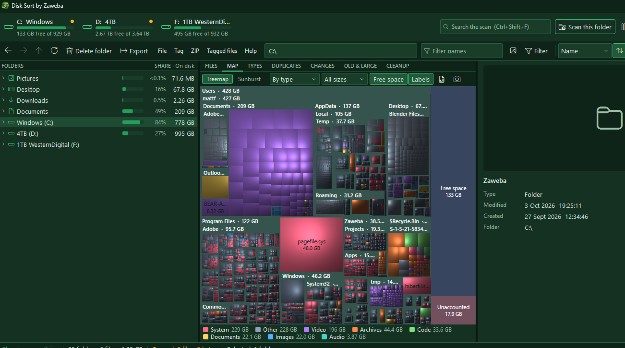
Two folders that should match often don't. A backup that missed a month. A copy on a laptop that was edited after it was made. A memory card that was only partly copied off. Compare with another folder in Disk Sort by Zaweba sets two folders side by side and lists what is missing, what is newer, what is different and what is the same.
The four answers
Missing means a file is in one folder and not the other. That's the gap in a backup or a copy that didn't finish.
Newer means both folders have the file but one copy was changed more recently. That tells you which version is current.
Different means the files share a name but aren't the same. It's a warning sign worth looking into before you overwrite anything.
The same means there's nothing to do. Seeing a long list of identical files is reassuring when you're about to delete the originals.
Workflows
Checking a backup. Compare your photos folder with its copy on a backup drive. Anything missing on the backup needs copying across. Anything newer at the source was edited since the last backup. If everything is the same, the backup is current.
Clearing a memory card or phone dump. Before wiping a card or deleting a phone's camera folder, compare it with the folder you copied it to. If nothing is missing, it's safe to clear. If something is, copy it first.
Merging two copies of the same project. People often end up with a folder on the desktop and one on an external drive, both partly edited. Comparing shows which files exist in only one place and which version of each is newer, so you can bring them together without losing work. Disk Sort never merges folders on its own; a clashing folder name becomes "Name (2)", so bringing copies together is something you do deliberately.
Tidying duplicate folders. When the size bars show two big folders that look alike, a comparison says whether one is a complete copy of the other. If it is, the extra one can go to the Recycle Bin.
Copying across what's missing
Once you know what's missing or newer, the usual file actions do the rest. Copy with C, or move with M, and every operation asks first with counts. Moving to another drive copies, checks everything arrived, and only then removes the original. Deletes go to the Recycle Bin after a confirmation with a preview.
How it differs from the duplicate finder
The DUPLICATES tab finds identical files anywhere in a scan, whatever they're called and wherever they are, and can confirm byte by byte. Compare with another folder is narrower and more direct: two folders, matched up, with clear answers about which side is missing what. Use duplicates to find waste across a drive; use comparison to check one folder against another.
Habits that make it reliable
Compare before you delete, not after. The point is to be sure the other copy is complete.
Compare in the right direction. A folder can be missing nothing from the backup's point of view while the backup is missing plenty from the source's. Read both sides.
Look closely at anything listed as different. Two files with the same name and different contents might be an edited version, or two unrelated files that happened to share a name.
It's a simple tool, and in Disk Sort by Zaweba it's the one to reach for whenever you're about to trust that two folders match.

