
Making new folders as you sort in Disk Sort
Make a folder in Disk Sort by Zaweba with Ctrl+Shift+N, the File menu or right-click, or straight from the Extract, Move and Copy windows.
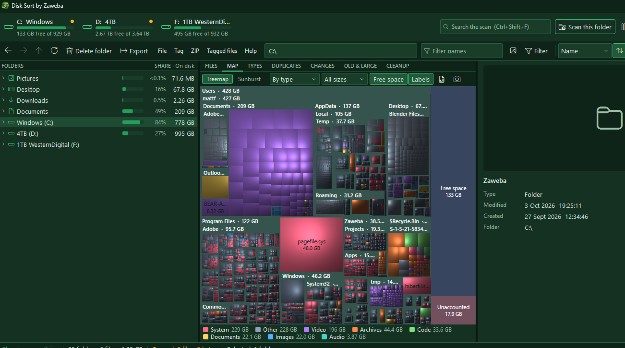
Sorting files nearly always means making somewhere to put them. Disk Sort by Zaweba lets you make a new folder from wherever you happen to be: Ctrl+Shift+N, the File menu, or the right-click menu. The Extract, Move and Copy windows have their own New folder button too, so you never have to abandon a move halfway to go and make the destination.
Where the button helps most
The New folder button inside the Move and Copy windows is the one that saves the most time. You've tagged forty photos from a weekend away and pressed M to move them. The window asks where to. The right folder doesn't exist yet. Click New folder, name it, and carry on. Without that button you'd cancel, go and make the folder, come back and tag everything again.
The same goes for extracting. Pulling files out of an archive into the folder you're in can scatter them among what's already there. Making a new folder from the Extract window keeps the archive's contents together, and there's an option to move the ZIP itself into that folder afterwards, so the archive and what came out of it sit side by side.
A simple sorting routine
A clear structure makes later sorting quicker. A routine that suits photos: open the folder the camera or phone dumped everything into, use Branch (B) if it's split into subfolders, and switch to thumbnails. Make a folder for each event with Ctrl+Shift+N. Tag the pictures for the first event and move them with M. Repeat for the next.
For downloads: make folders for the things you want to keep, such as manuals, receipts and installers worth keeping, tag and move each group, and what's left over in Downloads is usually safe to clear.
How moves into new folders behave
Every copy or move asks first with counts, so you can check the numbers before anything changes. Folders are never merged. If a folder you're moving has the same name as one at the destination, the new one becomes "Name (2)" rather than mixing the two. That's deliberate, since silently merging folders is a common way to lose track of which files came from where.
Moving to another drive copies everything, checks it all arrived, and only then removes the original, so a new folder on a backup drive gets a complete set or nothing changes at the source.
You can also drag files onto a folder in the tree or list. Within a drive that moves them; to another drive it copies. Ctrl copies and Shift moves, whatever the drive.
Naming as you go
Give new folders names you'll recognise in a year. A date at the front, such as a year and month, keeps them in order when sorted by name. If you change your mind, F2 in the tree renames a folder, and its tags, history and scan follow it.
Keeping the drive tidy
New folders are cheap, but too many become their own mess. A good rule is to make folders for the groups you'll actually look for later and leave the rest flat. Size bars in the tree will show you which of your new folders grow, and the treemap will show if one becomes a new problem.
Disk Sort by Zaweba also guards the places that matter. Windows, Program Files and the root of a drive are blocked from changes, which keeps a hurried sort from putting files where they shouldn't go.

