
Finding a file by name in a Disk Sort scan
Ctrl+Shift+F in Disk Sort by Zaweba searches names in the scanned data and lists every match in the Results view, ready to tag, move or delete.
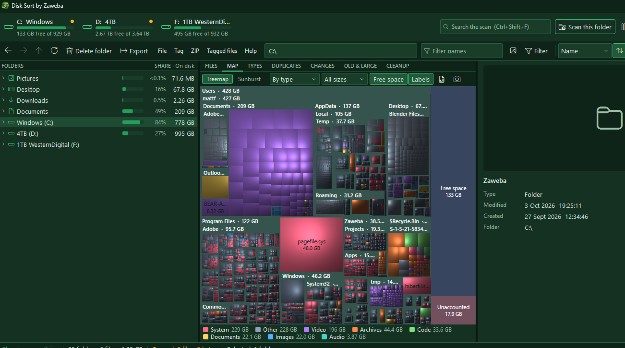
Searching in Disk Sort by Zaweba works on the scan rather than on the drive itself. Press Ctrl+Shift+F, type part of a name, and Disk Sort looks through the scanned data in the open folder and lists every match in the Results view. Because it's reading what the scan already gathered, it's quick, and the results land in the same list you use for everything else.
How it differs from the name filter
There's a name filter too, on Ctrl+F, and the two are easy to confuse. The name filter narrows what the current list shows, folder by folder or across a flat list. The search looks through the scan for matches below the open folder and gathers them into Results, its own mode in the Files tab.
Use the filter to thin out what's in front of you. Use the search when you know a file exists somewhere and need to find it.
Where the search looks
Search looks in the open folder, using the scanned data. That has two consequences worth knowing.
First, scan before you search. If the area hasn't been scanned, there's nothing for the search to read. Scan the drive from the strip at the top or use Scan this folder (Ctrl+O).
Second, open the right folder first. Searching from a drive's top level covers the whole scan, while searching from Pictures stays inside Pictures. Starting high finds more; starting low finds less but faster and with fewer false matches.
If files have changed since the scan, F5 refreshes the folder and Ctrl+F5 rescans everything, so the search sees the current state.
What people search for
Finding a lost download. You know the name had "invoice" in it, but not where it went. Search from the drive, and every file with that word appears.
Gathering scattered versions. Projects often leave copies called draft, final and final2 around the drive. Search for the project name and they're all in one list, ready to compare by date and size.
Hunting a big file type by name. Search for a word that appears in the names of video exports or phone backups and you can see how many there are and how much space they take.
Checking for leftovers. After uninstalling something, a search for its name shows any folders and files it left behind.
Working with the results
Results behave like any other list. Switch to the detailed list with Ctrl+2 to see sizes and dates, sort by size or modified date, and show the info panel to check where a file lives. Tag the ones you want with T, or all of them with Ctrl+T, then copy, move, zip, rename or delete them together. Deletes go to the Recycle Bin after a confirmation with counts and a preview.
Shift+Enter shows a file in Explorer, and Ctrl+Enter opens it with the default program, which is handy when you need to look inside before deciding.
Search tips
Search for the distinctive part. A short, common word matches hundreds of files; a project name or a camera prefix matches a few.
Combine with filters. After searching, use the kind filter to show only documents or only video, or the photo filter to narrow by date or camera.
Check which folder is open before you search again, since that decides how far the next search reaches.
Disk Sort by Zaweba runs offline and the search never leaves your PC.

