Matching search intent and format with SEO by Zaweba
SEO by Zaweba compares the intent and format of the pages winning a search with your page. A mismatch becomes the top priority in your plan.
One check in SEO by Zaweba can outweigh all the others. It looks at what kind of page is winning the results for your term, its intent and its format, and compares that with your page. If they don't match, the mismatch becomes the top priority in the action plan, ahead of titles, headings and everything else.
There's a good reason for that. You can polish a page until every check passes, but if it's the wrong kind of page for the search, it will struggle to rank above pages that are the right kind.
What intent and format mean
Intent is what the searcher wants. Someone typing a question wants an answer. Someone typing a product name and buy wants to buy. Someone typing near me wants a local business. Format is the shape of the page that serves that want: a guide, a list, a product page, a category page, a comparison, a service page.
Search results show what Google thinks fits. If the top ten for a term are all how-to guides, a product page is fighting the tide.
How SEO by Zaweba works it out
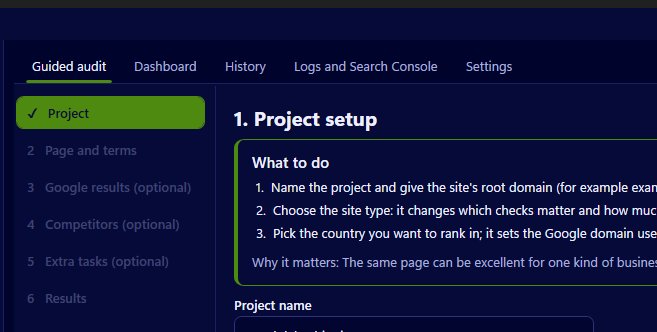
In Step 3 you paste the Google results page for your term, searched in your own browser. The parser reads the organic results, the featured snippet and its format, People also ask, local pack, shopping and the other features on the page. Step 4 then crawls the top results with the same checks as your page, including working out each page's type.
Put together, that shows what kind of page is winning. The comparison step sets your page against it.
When there's a mismatch
The fix isn't usually a tweak. If the winners are guides and your page is a product page, the answer may be to write a guide, and link it to the product page, rather than stuff the product page with text. If the winners are local service pages and yours is a national one, a page for the local search may be needed.
The next steps advice helps here. It suggests pages that should exist, including page types competitors have and you don't, and pages for modifier splits and clusters of People also ask questions.
When it matches
If your page is already the right kind, the intent check passes and the plan moves on to the next most important thing. That's useful to know in itself: it tells you the problem lies in content, links, speed or trust rather than in the type of page.
Mistakes to avoid
Don't paste a results page for the wrong term. The check is only as good as the results you give it, so search for the term exactly as a customer would, in the country you set for the project. Untick results in Step 3 that aren't real competitors, such as directories or video results if they don't apply.
Don't ignore a mismatch because the fix is bigger than you hoped. Creating a new page is more work than editing a title, but it's the change most likely to make a difference. The priority in SEO by Zaweba weighs severity, weight and confidence against effort, and a mismatch still comes first because it matters that much.