Typing practice with classic literature passages
Type by Zaweba includes 13 public-domain passages from books such as Alice, Pride and Prejudice and Moby-Dick to practise typing on.
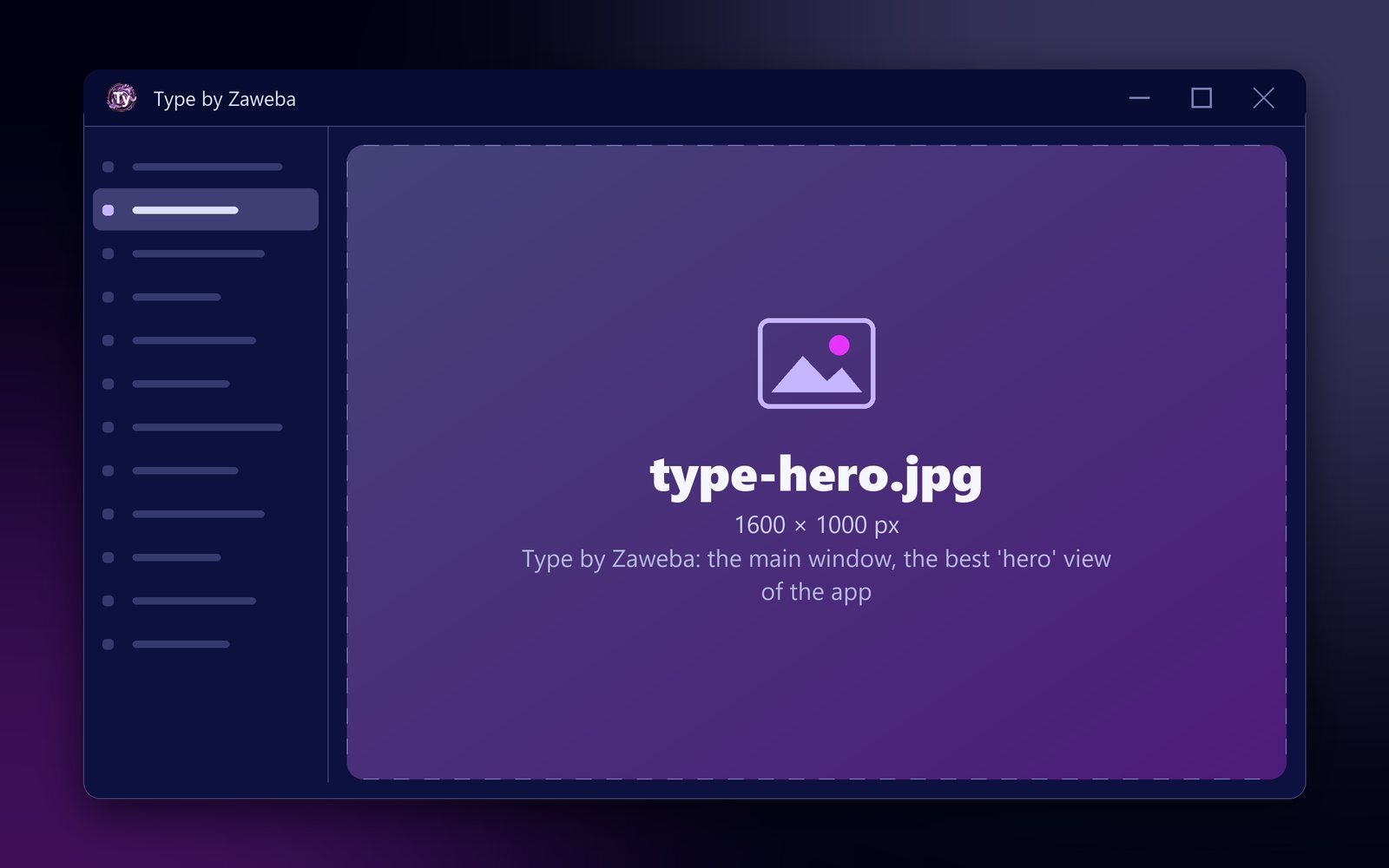
Classic literature makes some of the best typing practice there is, and Type by Zaweba has 13 such passages built in. They are all public domain and were first published before 1900, and they include Jane Taylor's The Star, Lewis Carroll's Jabberwocky and Alice, Mark Twain's Tom Sawyer, Pride and Prejudice, A Tale of Two Cities, Moby-Dick and Jane Eyre. Each one is an opening, ready to type as soon as you choose it.
Type is a free touch-typing tutor that works offline with no adverts or accounts. The passages sit alongside its 30 lessons, its drills and its two games, as a place to put new skills to work on real writing.
Why real prose helps
Lesson text is built to teach. It uses only the keys you know, and it repeats the new ones until they stick. That is exactly right while you learn, but sooner or later you need text that wasn't written for a typing tutor. Real sentences have long words and short ones, commas in odd places, capitals where names appear and the rhythm of a person writing.
Old books are good for this. Victorian sentences run long and use plenty of semicolons and commas, which gives the punctuation keys more work than modern writing tends to. Carroll's Jabberwocky is full of invented words that you can't predict, so your fingers have to follow each letter rather than guessing the word. A Tale of Two Cities opens with a famous run of balanced phrases that is satisfying to type at a steady pace.
Choosing a passage
Pick a passage you find pleasant to read. You'll type it more than once, and a text you like is easier to come back to. Shorter, simpler openings such as The Star suit a newer typist; the longer novels suit someone after a stamina workout.
In kid mode only the kid-friendly passages are shown, so a child picking from the list will find something suitable without a grown-up filtering it first. Kid mode also uses bigger text, keeps the clocks out of the way by default and lets mistakes wait for the right key.
Practising with a time limit
Adults can set an optional time limit of 1 to 5 minutes on a passage. A short limit is a good warm-up, and the longer ones test whether your accuracy holds up as you tire. Without a limit, you simply type to the end.
While you type, Type shows live speed, accuracy and a clock, and afterwards the results card gives net words per minute, accuracy, time, mistakes and the keys that caused them. Net speed counts every five characters as a word and takes off a word for each error left uncorrected, so a careful run usually scores better than a rushed one.
Where the classics fit in the course
The course itself ends on a classic. Lessons 27 to 30 are about speed and stamina, finishing with a classic passage and a final challenge, so by the time you reach the passage list you have already had a taste. After that, the passages are the natural next step: real text, no new keys, and a record of how you are doing.
If a passage keeps tripping you on the same keys, take that to Smart drill. It picks your five weakest keys by error rate and slowness and builds practice around them, and then the passage feels easier on the next go. Ghost race is another option for a short passage, setting you against a replay of your own best run.
Bringing in your own books
Thirteen passages go a long way, but you are not limited to them. Practise on your own text lets you paste anything, including a favourite chapter from a book you own. Curly quotes and dashes are straightened, and characters your layout cannot type are left out and listed, so you can see what changed.
Type a page of Austen or Dickens a few times a week and you get two things at once: better typing and a reminder of how good those openings are. Type by Zaweba keeps them ready for whenever you want them.