Painting with bristle brushes in Vectornation by Zaweba
How the bristle brushes in Vectornation by Zaweba model a real brush head, with nine shapes, pressure, splaying bristles, trailing and dry brush gaps.
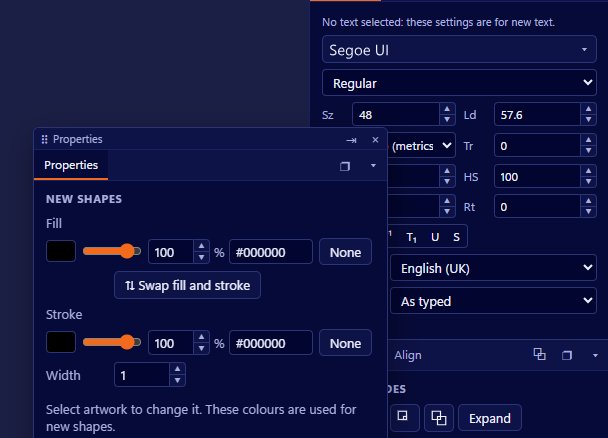
Most vector brushes are clever ways of stretching a shape along a path. The bristle brushes in Vectornation by Zaweba take a different approach: they model a brush head made of individual bristles and work out what each one does as you paint. The result is a stroke that behaves more like paint on paper, while still being vector artwork you can edit and scale.
A brush head with nine shapes
Real brushes come in different shapes, from round and pointed to flat and wide, and each leaves a different mark. Vectornation offers nine brush head shapes. A pointed head gives strokes that can go from fine to full; a flat one gives broad marks with crisp sides. Trying the same stroke with several shapes is the quickest way to learn their personalities.
Pressure and splaying
With a pressure sensitive pen, pressing harder brings more bristles down onto the page and splays them outwards, just as a real brush spreads when you lean on it. Light pressure gives a slim mark from the tip; heavy pressure gives a wide one with visible bristle texture.
This makes the pen worth using for bristle work. With a mouse, you lose most of what makes these brushes interesting, because the stroke has no pressure to respond to.
Soft bristles, bends and dry brush
Soft bristles trail behind on bends. When you curve a stroke sharply, the bristles lag a little and the mark sweeps round the corner instead of turning stiffly. It gives curves a natural, fluid look.
Paint also runs dry. As a long stroke goes on, the brush leaves dry brush gaps, where some bristles stop leaving paint and the background shows through. This is what gives a quick, dragged stroke its character. If you want solid colour all the way along, use shorter strokes; if you want texture, use longer ones.
Flat brushes and angle
Flat brushes can either keep their angle or follow the pen. Keeping the angle works like calligraphy: the brush stays tilted the same way, so horizontal and vertical strokes come out at different widths. Following the pen means the flat edge turns with the direction of travel, giving more even strokes, closer to a brush held loosely and allowed to rotate.
Choose the first for lettering and calligraphic marks, and the second for broad colour and background work.
There are seven library brushes ready to use. They are a good place to begin, because they show what different combinations of shape and behaviour can do. Paint a few marks with each before you change any settings.
Using bristle brushes in a design
Bristle strokes look best where they have room. Use them for backgrounds, washes, expressive lettering and accents, and keep crisp vector shapes for the parts that need to read clearly. A logo drawn entirely with bristle strokes can lose definition at small sizes, while one with a single bristle accent keeps its clarity and gains some life.
Layer strokes the way a painter would: lighter, wider marks first, then smaller and darker detail on top. Because each stroke is its own object, you can reorder, recolour or delete them later, which is something real paint never lets you do.
Watching the stroke count
Bristle strokes can be heavy to draw if you build up hundreds of them on one artboard. Work in layers, hide what you are not working on, and keep the number of strokes sensible for the size of the piece.
When you print, view the artwork at its real size. Fine bristle texture that looks rich on screen when zoomed in may be too fine to see at the finished size, and a slightly heavier brush may serve better.
Bristle brushes are one of the places where Vectornation goes beyond imitating shapes and actually models how a tool behaves. With a pen in hand, they are well worth an afternoon of practice.